
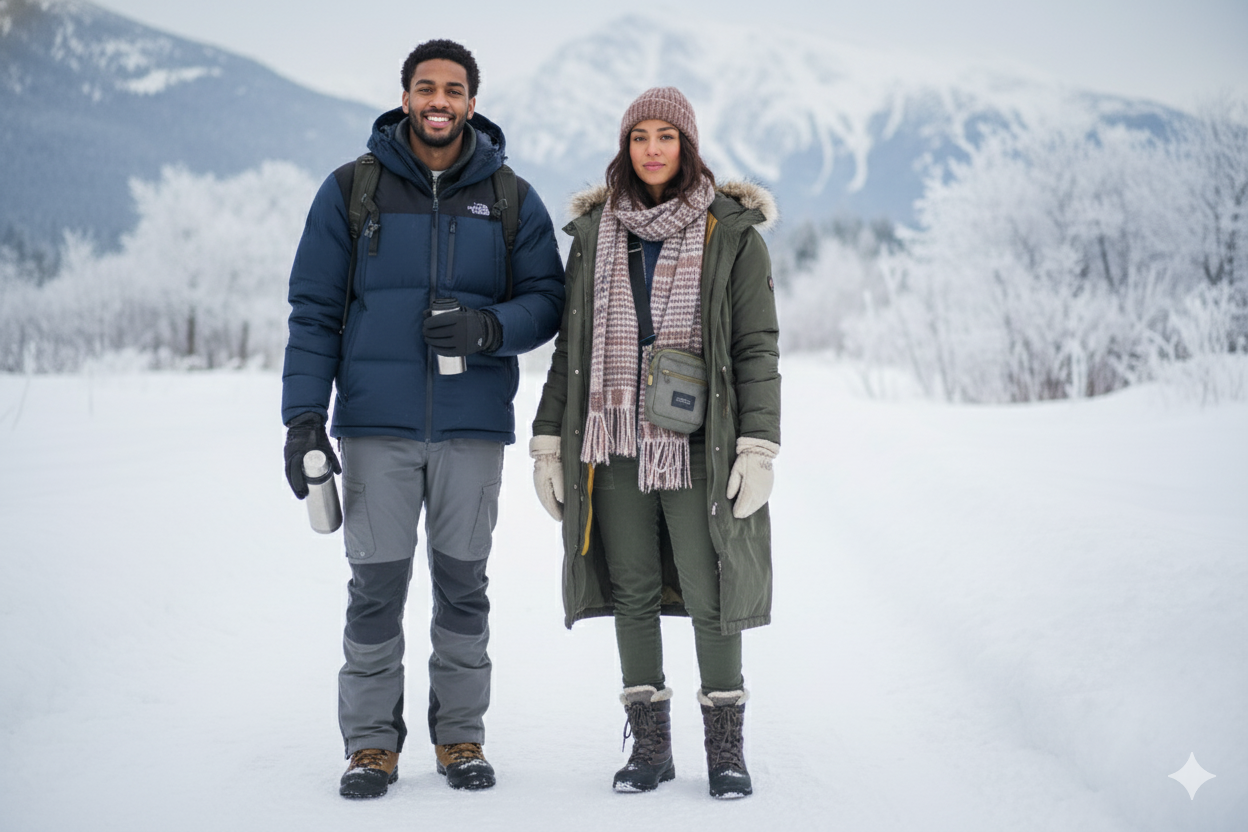
When temperatures drop and frost begins to form, knowing how to dress properly for cold weather becomes essential for comfort, safety, and enjoying outdoor activities. Whether you're commuting to work, hiking in the mountains, or simply running errands on a freezing day, the right clothing strategy can make all the difference between a miserable experience and a comfortable one.
The secret to staying warm in cold weather isn't about wearing the thickest coat you can find. Instead, it's about mastering the art of layering. The three-layer system has been proven by outdoor enthusiasts, mountaineers, and winter experts as the most effective approach to cold-weather dressing.
Your base layer sits directly against your skin and serves one critical purpose: keeping you dry. Wet skin loses heat 25 times faster than dry skin, making moisture management your first line of defense against the cold.
What to look for in a base layer:
Best base layer choices:
Your middle layer traps warm air close to your body, creating an insulating barrier against the cold. This is often the layer people focus on most when preparing for winter weather.
Insulating layer options:
Fleece jackets are affordable, breathable, and work well for moderate cold. Heavyweight fleece provides better insulation than lightweight versions.
Down jackets offer the best warmth-to-weight ratio and compress easily for packing. However, down loses its insulating properties when wet, making it less ideal for damp conditions.
Synthetic insulated jackets perform better in wet weather than down and continue insulating even when damp. They're excellent for active pursuits where you might sweat.
Pro tip: Don't forget your legs! Fleece-lined leggings or insulated pants are just as important as a warm jacket for maintaining overall body temperature.
Your outer shell protects all the layers beneath from wind, rain, snow, and sleet. Even the best base and insulating layers can't keep you warm if they get soaked from the outside.
Essential outer layer features:
You can have perfect layering on your core and still be miserable if your extremities are cold. Your body prioritizes keeping your core warm, which means hands, feet, and head are the first to feel the chill.
You lose significant body heat through your head, making a good hat essential in cold weather.
Cold hands can quickly ruin any outdoor experience. Here's how to keep them warm:
Cold feet are not just uncomfortable—they can be dangerous and lead to frostbite.
Boot selection:
Sock strategy:
Adjust before you need to: Don't wait until you're sweating or shivering. Add your shell at the first sign of wind or precipitation. Remove your insulating layer the moment you start to feel warm during activity.
Avoid cotton completely: Cotton absorbs water and takes forever to dry, which can lead to dangerous heat loss. This applies to all layers—base, middle, and even accessories like scarves.
Ensure layers fit well together: Your middle and outer layers should slide on and off easily. If layers fit too tightly together, you'll restrict circulation and create difficulty adjusting to temperature changes.
Ventilate strategically: Many quality jackets have pit zips or other ventilation features. Use these to release excess heat without removing entire layers.
Dress for your activity level: If you'll be highly active (skiing, shoveling, hiking), dress slightly lighter than if you were standing still. Activity generates heat, and overdressing leads to sweating and eventual chilling.
Stay fueled and hydrated: Your body needs extra calories to maintain warmth in cold weather. Eat regular snacks and drink plenty of water—dehydration reduces your body's ability to regulate temperature.
Keep moving: If you start to feel cold, light physical activity helps generate body heat. However, avoid sweating heavily if you can't change layers soon.
Know the signs of hypothermia and frostbite: Symptoms include uncontrollable shivering, confusion, numbness, and white or grayish skin patches. Seek medical attention immediately if these occur.
Plan for the unexpected: Weather can change quickly. Always pack an extra layer, even if forecasts look favorable.
READ ALSO:- How to Clean White Shoes at Home
Dressing properly for cold weather isn't complicated once you understand the three-layer system and how to protect your extremities. By choosing the right materials, ensuring proper fit, and adjusting layers as conditions change, you can stay comfortable and safe in even the coldest winter conditions.
Remember: the goal isn't just survival—it's enjoying winter to its fullest. With the right clothing strategy, you can embrace cold weather activities, maintain your daily routine, and appreciate the beauty of the winter season without discomfort.
Stay warm out there, and don't let cold weather keep you indoors!